Rule-Based vs AI Chatbot: Which Is Right for Your Business?
If you are weighing rule-based vs AI chatbot for your shop or service business, here is the short version: a rule-based chatbot follows buttons and scripts you wire by hand, while an AI chatbot understands the question and answers in plain language. Both can sit on your website. They behave very differently the moment a real customer types something you did not predict.
Quick answer: Pick a rule-based chatbot when your customer journey is a short, fixed menu (track order, store hours, two or three known choices). Pick an AI chatbot grounded in your own content when customers ask open questions in their own words, including Taglish, because it understands intent instead of matching exact buttons.
I run Resulve, an embeddable AI chatbot for Philippine small businesses, so I am not a neutral party. Still, I have set up both kinds, and there are real cases where the simple one is the right call. Let me walk through the honest version.
What a rule-based chatbot actually is
A rule-based chatbot is a decision tree. You build the branches yourself: if the visitor taps "Order status," show this. If they tap "Shipping," show that. Every reply is something you typed in advance, and every path is something you mapped out.
This works because it is predictable. The bot never says anything surprising, because it can only say what you wrote. For a business with two or three common questions, you can build the whole thing in an afternoon, and it will answer those questions correctly forever.
The trouble starts when a customer goes off-script. They will not always tap your tidy buttons. They type "pwede ba COD?" or "do you deliver to Cavite on Sundays?" and if you did not anticipate that exact phrasing, the bot stalls. It loops back to the main menu, repeats a canned line, or asks them to rephrase. Most people just leave at that point.
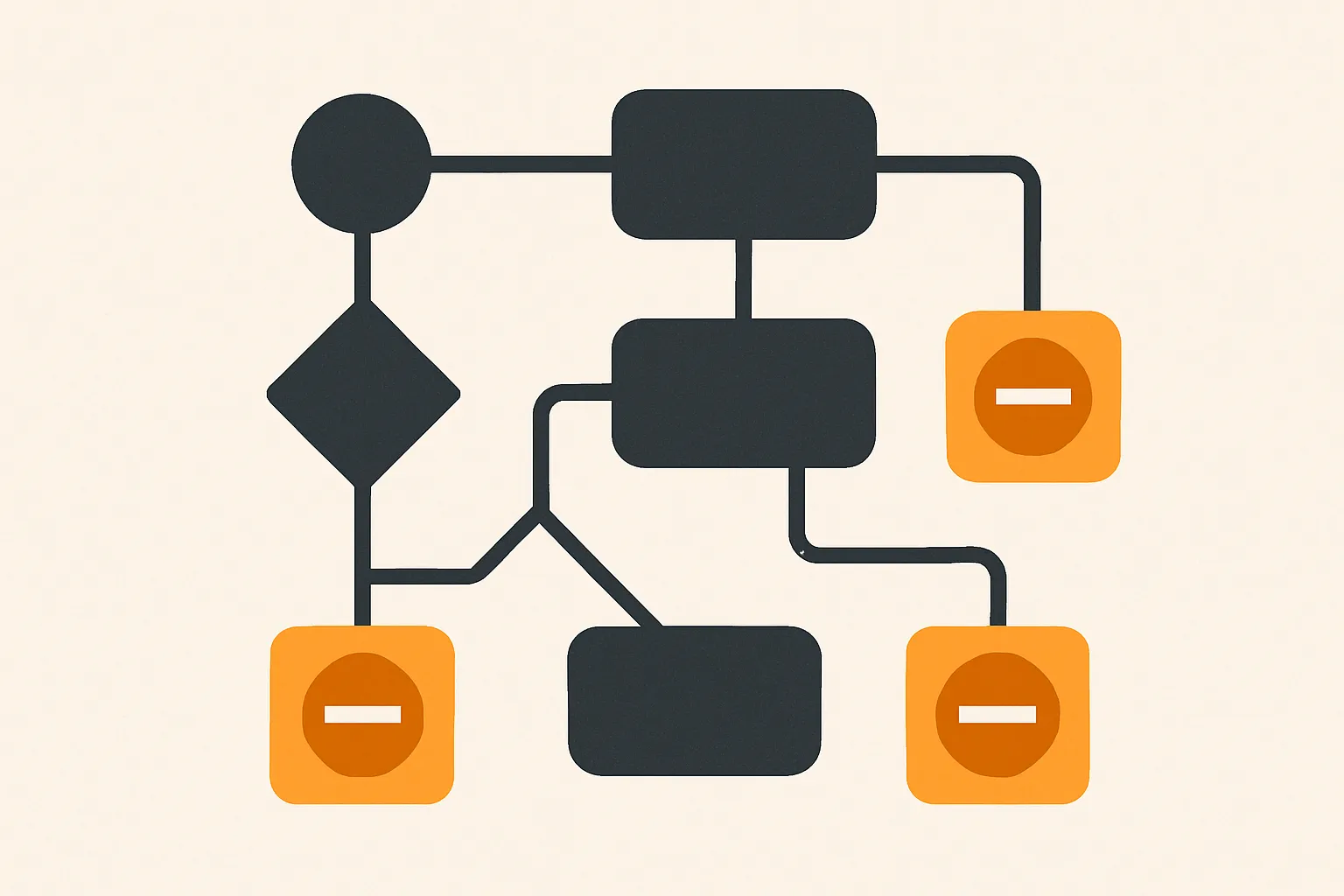
A rule-based bot also grows in a painful way. Every new question your customers ask becomes a new branch you have to design, test, and maintain. The flowchart gets wider and deeper. Six months in, nobody on your team fully remembers how it is wired, and updating one answer means hunting through nodes.
What an AI chatbot does differently
An AI chatbot does not match buttons. It reads the question, works out what the person actually wants, and writes a reply in plain language. When it is grounded, it pulls those answers from your own content: your FAQs, your docs, your policies, whatever you pasted in.
Grounded matters. An ungrounded AI bot can make things up, which is the fear most owners have, and a fair one. A grounded AI chatbot is told to answer only from your material, so it stays close to facts you actually wrote. When it does not know, a good one says so and offers human handoff instead of inventing a delivery fee or a return window.
The phrasing problem mostly disappears. "Pwede ba COD?", "is cash on delivery available?", and "do you accept COD" all land on the same answer, because the bot understands meaning, not keystrokes. For Filipino businesses this is the big one. Customers mix English and Tagalog in a single sentence, and a grounded AI chatbot handles Taglish without you building a separate branch for every variation.
Rule-based vs AI chatbot, side by side
Here is the plain comparison I give people who ask.
| Factor | Rule-based chatbot | Grounded AI chatbot |
|---|---|---|
| How it answers | Matches buttons and exact scripts | Understands the question, replies in plain language |
| Off-script questions | Stalls or loops to the menu | Answers from your own content |
| Taglish and rephrasing | Needs a branch per variation | Handled by default |
| Setup effort | Map every path by hand | Paste your FAQs and docs |
| Upkeep as you grow | Add and test new branches | Update the source content |
| When it is unsure | Repeats a canned line | Says so and hands off to a human |
| Best fit | Narrow, fixed menus | Real, open customer questions |
Neither column is "bad." They suit different shapes of business.
When a rule-based chatbot is genuinely fine
I will not pretend everyone needs AI. A rule-based chatbot is a sensible choice when your interaction is narrow and fixed. Think of a bot whose only job is "tap here to track your order" or "tap here for today's queue number." There is one path, the answers never change, and there is nothing to interpret. In that case the simplicity is a feature, not a limit.
It is also fine when you want total control over wording for legal or compliance reasons, and you would rather the bot say nothing than say something slightly off. A scripted bot will never go off the page, because it has no page beyond the one you wrote.
The honest catch: the moment your customers start asking real questions in their own words, that narrow menu becomes a wall. You feel it as a rising pile of "the bot did not get me" complaints, and as more chats bouncing to your inbox anyway.
Why grounded AI wins for real customer questions
Most small businesses do not have a two-button customer. They have people asking about sizes, stock, delivery areas, payment options, refunds, store hours during holidays, and twenty other things, often phrased in ways you would never guess. That long, messy list is exactly where rule-based bots fall apart and grounded AI holds up.
Setup is also lighter than people expect. With Resulve you paste your FAQs and documents, drop one script tag on your site, and you are live in under ten minutes. No flowchart to design. When your prices or policies change, you update the source content and the answers follow, rather than rewiring branches.
There is a cost difference to be fair about. A rule-based bot, once built, runs for free since it is just logic. An AI chatbot uses model inference, so it has a per-message cost. Resulve handles this with prepaid credits: 100 free credits to start, then pay-as-you-go from 199 pesos, paid through PayMongo QR Ph (GCash, Maya, or your bank app). No subscription lock-in. You can build a Resulve bot for free and see how it answers your real questions before spending anything, and the full pricing is on one page.
How to choose for your business
Run a quick test. Write down the last twenty questions real customers actually asked you, in their real words. If almost all of them fit two or three fixed buttons, a rule-based chatbot will serve you well and cost nothing to run. If they sprawl across topics and phrasings, especially in Taglish, a grounded AI chatbot will save you far more handoffs and lost customers than it costs in credits.
The deciding factor in rule-based vs AI chatbot is not which is more advanced. It is how your customers actually talk to you. Match the tool to that, and either choice can be the right one.
Frequently asked questions
Is a rule-based chatbot cheaper than an AI chatbot?
To run, yes, since a rule-based bot is just logic with no per-message cost. But it costs you in lost customers every time someone phrases a question outside your scripts. A grounded AI chatbot has a small per-message cost (Resulve uses prepaid credits from 199 pesos, with 100 free to start), and it answers far more of those off-script questions.
Will an AI chatbot make up answers?
A grounded one is built to avoid that. It answers only from the content you give it, your FAQs and documents, and when it does not know, it says so and offers human handoff rather than guessing. Ungrounded bots are the ones that invent things, which is why grounding matters.
Can a rule-based bot handle Taglish?
Only if you build a branch for each way someone might phrase it, which gets unmanageable fast. A grounded AI chatbot understands mixed English and Tagalog by default, so "pwede ba COD?" and "do you accept cash on delivery" reach the same answer.
How long does each take to set up?
A rule-based bot takes as long as it takes to map every path you want, which scales with how many questions you cover. A grounded AI chatbot like Resulve is faster for broad coverage: paste your FAQs and docs, add one script tag, and you are live in under ten minutes.
Can I switch from a rule-based bot to an AI chatbot later?
Yes. Many businesses start with simple scripts and move on once the "the bot did not get me" messages pile up. With Resulve you can paste your existing FAQ content, test it free, and replace the old widget when you are ready. There is no subscription to cancel, just credits you use as you go.
Ready to try it?
Set up an AI receptionist that answers and books for your business — free to start.
Start free